
Halfway House Management Software Guide: DOC Compliance & Operations
Guide to halfway house management software with DOC/BOP compliance features. Compare platforms, pricing, and implementation for reentry programs.

Legal Disclaimer
This article provides general information for educational purposes only. It is not legal, financial, or compliance advice. Recovery housing regulations vary by state, county, and municipality. You must consult with a qualified local attorney and your municipality's code enforcement office to confirm all requirements at every level of jurisdiction. Regulations change frequently — always verify current requirements directly with relevant government agencies.
HIPAA & 42 CFR Part 2 Notice: Software and technology recommendations in this article are for informational purposes only. Any platform that stores, transmits, or processes protected health information (PHI) or substance use disorder patient records must comply with HIPAA and 42 CFR Part 2 confidentiality requirements. Before adopting any software, have a qualified healthcare attorney and IT security specialist verify that the platform meets all applicable federal and state privacy regulations for your organization. A signed Business Associate Agreement (BAA) is required before sharing any patient data with a third-party vendor.
Halfway House Management Software Guide: DOC Compliance & Operations
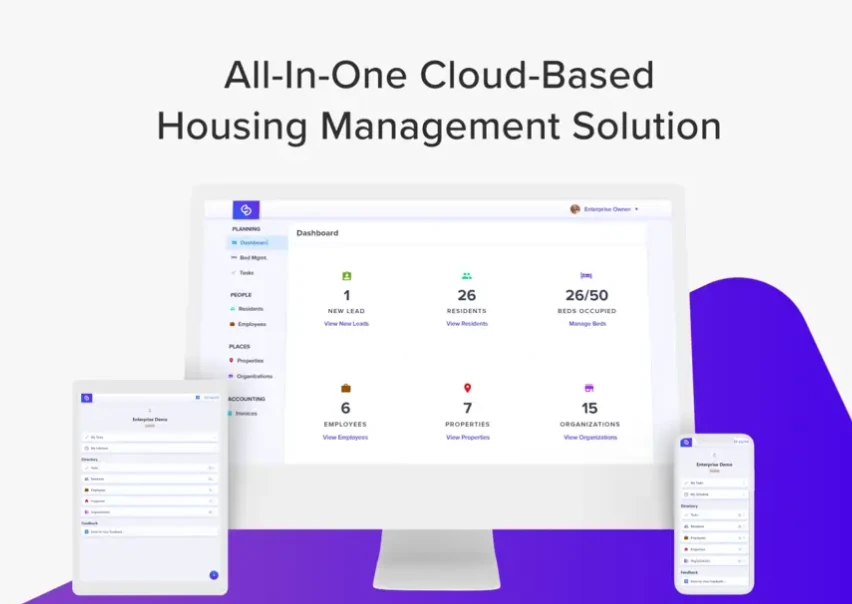
Managing a halfway house involves navigating complex DOC contracts, strict compliance requirements, and intensive supervision protocols that standard software platforms can’t handle. Operators spend up to 40 hours weekly on manual reporting and documentation required by correctional departments.
Halfway houses serve a critical role in the criminal justice system, providing structured transitional housing for individuals reentering society. With recidivism rates directly tied to program effectiveness, the right management software can mean the difference between successful reintegration and program violations.
This comprehensive guide evaluates every software platform capable of supporting halfway house operations, analyzing DOC compliance features, supervision tracking capabilities, and implementation strategies for correctional residential programs.
Understanding Halfway House Operations
Types of Halfway House Programs
Federal Residential Reentry Centers (BOP Contracts)
- Bureau of Prisons contracted facilities
- Strict federal compliance requirements
- Standardized reporting protocols
- Pre-release and post-release populations
State DOC Contracted Facilities
- State department of corrections partnerships
- Varying compliance requirements by state
- Community custody supervision
- Work release and transitional programming
Community Corrections Centers
- Local government partnerships
- County jail alternative programs
- Day reporting and residential services
- Court-ordered placements
Private Halfway Houses
- Self-pay and insurance billing
- Voluntary admissions with court referrals
- Flexible programming options
- Recovery-focused with criminal justice components
Unique Software Requirements
Unlike sober living homes or transitional housing programs, halfway houses must manage:
Court-Ordered Compliance
- Mandatory program participation tracking
- Curfew and check-in monitoring
- Employment verification requirements
- Community service hour documentation
- Restitution payment tracking
Supervision Protocols
- Regular contact with probation/parole officers
- Violation documentation and escalation procedures
- Location monitoring and movement tracking
- Substance abuse testing with immediate reporting
- Emergency contact protocols
DOC Reporting Requirements
- Daily, weekly, and monthly automated reports
- Incident notification within specified timeframes
- Population counts and bed utilization statistics
- Program completion and outcome tracking
- Financial accountability and billing documentation
Platform Analysis for Halfway House Operations
1. Sober Living App (Behave Health)
Halfway House Specific Features: ⭐⭐⭐⭐⭐
DOC Compliance Capabilities:
Automated Reporting
- Customizable report templates for different DOC contracts
- Scheduled automatic generation and delivery
- Real-time population and bed utilization reporting
- Incident notification with timestamp documentation
- Program participation and completion tracking
Supervision Management
- Check-in scheduling and missed contact alerts
- Probation officer communication portal
- Electronic monitoring integration capabilities
- Location tracking with geofencing alerts
- Curfew violation automatic notifications
Court Order Tracking
- Individual court order requirement documentation
- Mandatory program assignment and completion tracking
- Community service hour logging and verification
- Restitution payment scheduling and monitoring
- Violation escalation procedures with automatic notifications
Implementation for Halfway Houses:
Federal BOP Facilities:
- Pre-configured BOP reporting templates
- Federal compliance standards built-in
- Automated SENTRY system integration capabilities
- Standardized incident classification and reporting
- Pre-release and post-release population management
State DOC Contracts:
- Customizable templates for state-specific requirements
- Flexible reporting schedules and formats
- State compliance standards configuration
- Integration with state correctional information systems
- Violation tracking with state-specific escalation procedures
Pricing for Halfway Houses: $299-499/month per facility
- Higher pricing tier reflects specialized compliance features
- Includes DOC-specific training and setup
- Dedicated compliance support team
- Priority technical support for critical reporting
Customer Case Study: “Our 64-bed facility was spending 35 hours weekly on DOC reporting. Sober Living App reduced that to 5 hours with automated generation. Our compliance officer can focus on resident services instead of paperwork.” - Program Director, State DOC Contract Facility
Strengths: ✅ Only platform built specifically for DOC compliance ✅ Comprehensive supervision tracking capabilities ✅ Automated reporting reduces administrative burden by 80% ✅ Strong incident management and notification systems ✅ Proven track record with federal and state contracts
Limitations: ❌ Higher cost than basic recovery housing platforms ❌ Complex setup requires dedicated implementation support ❌ May be overkill for facilities without DOC contracts
2. Sobriety Hub
Halfway House Specific Features: ⭐⭐
Limited DOC Capabilities:
Basic Features:
- Simple resident tracking
- Basic incident reporting
- Limited compliance monitoring
- Manual report generation required
- No automated DOC notification systems
Major Gaps for Halfway Houses:
- No DOC-specific reporting templates
- Limited supervision tracking capabilities
- No court order compliance monitoring
- Basic violation documentation
- No automated notification systems
Why It Falls Short: Sobriety Hub was designed primarily for voluntary sober living programs and lacks the specialized features required for correctional residential facilities. Operators using this platform for halfway houses typically need additional software or manual processes to meet DOC requirements.
Pricing: $149-249/month per facility
- Lower cost reflects limited feature set
- No DOC-specific training or support
- Basic technical support only
3. One Step Software
Halfway House Specific Features: ⭐
Minimal DOC Support:
Basic Functionality:
- Simple resident database
- Limited reporting capabilities
- No automated compliance features
- Manual documentation processes
Critical Missing Features:
- No DOC compliance templates
- No supervision tracking
- No automated reporting
- No violation management
- No court order tracking
Conclusion: Not suitable for halfway house operations requiring DOC compliance.
4. Custom Development Solutions
Halfway House Specific Features: ⭐⭐⭐⭐⭐ (if properly developed)
When Custom Development Makes Sense:
Large Multi-Facility Operations:
- 500+ beds across multiple facilities
- Technology budget exceeding $500,000
- Dedicated IT staff and resources
- Unique contract requirements not met by existing platforms
Federal Contract Specialists:
- BOP-only operations with high volume
- Specialized integration requirements
- Long-term contracts justifying development costs
- Technical expertise available in-house
Development Considerations:
Initial Costs:
- Development: $300,000-800,000
- Integration: $100,000-250,000
- Testing: $50,000-100,000
- Training: $25,000-50,000
Ongoing Costs:
- Maintenance: $100,000-200,000 annually
- Updates: $50,000-100,000 annually
- Support: $25,000-75,000 annually
Timeline:
- Development: 18-24 months
- Testing: 3-6 months
- Implementation: 6-12 months
- Total: 2.5-3.5 years to full deployment
5. Generic CRM/ERP Platforms
Halfway House Specific Features: ⭐
Why Generic Platforms Fail:
Salesforce, HubSpot, Microsoft Dynamics:
- No DOC compliance features
- Complex customization required
- High per-user costs
- Extensive training needed
- Limited reporting capabilities for correctional requirements
Attempted Implementation Results:
- 80% of implementations fail to meet DOC requirements
- Manual workarounds required for compliance
- High ongoing customization costs
- Poor user adoption among correctional staff
- Compliance violations due to system limitations
DOC Contract Compliance Requirements
Federal BOP Contract Requirements
Population Reporting:
- Daily population counts by custody level
- Admission and release notifications within 24 hours
- Bed utilization and capacity reporting
- Demographics and sentence information tracking
Program Compliance:
- Mandatory programming attendance tracking
- Educational and vocational program participation
- Substance abuse treatment completion rates
- Employment verification and income reporting
Supervision Standards:
- Regular contact documentation with specific frequency requirements
- Location monitoring and movement tracking
- Curfew compliance and violation reporting
- Substance abuse testing with immediate result reporting
Financial Accountability:
- Per diem billing accuracy and timeliness
- Resident account management and reporting
- Cost per resident tracking and analysis
- Contract performance metrics and outcomes
State DOC Contract Variations
Common State Requirements:
California DOC:
- CDCR reporting standards
- Parolee supervision protocols
- AB 109 realignment compliance
- Electronic monitoring integration
Texas DOC:
- TDCJ reporting requirements
- Community supervision coordination
- Substance abuse testing protocols
- Employment verification standards
Florida DOC:
- FDC contract compliance
- Community control supervision
- Graduated sanctions protocols
- Reentry programming requirements
New York State:
- DOCCS reporting standards
- COMPAS assessment integration
- Community supervision coordination
- Evidence-based programming requirements
Local Corrections Partnerships
County Jail Alternatives:
- Population cap management
- Court appearance compliance
- Electronic monitoring coordination
- Work release supervision
Community Corrections:
- Day reporting integration
- Drug court compliance
- Mental health court coordination
- Veterans court requirements
Critical Software Features for DOC Compliance
Automated Reporting Systems
Daily Reports:
- Population count with breakdown by status
- New admissions and releases
- Program attendance summaries
- Incident reports and violations
- Staff scheduling and coverage
Weekly Reports:
- Program participation rates
- Employment status updates
- Community service hour completion
- Drug testing results summary
- Financial account status
Monthly Reports:
- Comprehensive outcome tracking
- Recidivism and success rates
- Budget and expenditure analysis
- Staffing and training compliance
- Program effectiveness metrics
Incident Management and Notifications
Immediate Notification Events:
- Escape or unauthorized absence
- Positive drug tests
- Criminal activity or arrests
- Medical emergencies
- Disciplinary actions
Escalation Procedures:
- Automatic notification to DOC contacts
- Timestamp documentation for all actions
- Follow-up requirement tracking
- Resolution documentation
- Outcome reporting
Supervision Tracking Tools
Contact Management:
- Scheduled and unscheduled contact logging
- Probation/parole officer communication portal
- Court appearance scheduling and compliance
- Employment verification and updates
- Community service coordination
Location Monitoring:
- GPS integration for electronic monitoring
- Geofencing alerts for unauthorized areas
- Curfew compliance tracking
- Movement pattern analysis
- Emergency location services
Financial Management for DOC Contracts
Per Diem Billing:
- Automated calculation based on occupancy
- Daily rate adjustments for different populations
- Invoice generation and delivery
- Payment tracking and collections
- Contract performance bonuses/penalties
Resident Financial Management:
- Individual account tracking in the ledger
- Income verification and reporting
- Restitution payment coordination
- Personal expense monitoring
- Financial counseling documentation
Implementation Strategy for Halfway Houses
Pre-Implementation Planning
DOC Contract Analysis:
- Review all contract requirements and deliverables
- Identify specific reporting schedules and formats
- Document current compliance gaps and challenges
- Map existing workflows and processes
Stakeholder Engagement:
- DOC contract managers and liaisons
- Facility administrators and supervisors
- Line staff and case managers
- IT support and technical teams
- Residents and community partners
Data Audit and Migration:
- Current resident information and status
- Historical program participation data
- Financial records and billing history
- Incident reports and violations
- Staff training and certification records
Phase 1: Core System Setup (Weeks 1-4)
System Configuration:
- DOC-specific reporting templates
- User roles and permissions for correctional staff
- Automated notification rules and escalation procedures
- Integration with existing DOC systems
- Security protocols and access controls
Data Migration:
- Resident information and case files
- Program participation history
- Financial account data
- Incident and violation records
- Staff and training documentation
Phase 2: Training and Testing (Weeks 5-8)
Staff Training Programs:
- Administrative staff on reporting and compliance features
- Case managers on supervision tracking tools
- Line staff on incident reporting and documentation
- Financial staff on billing and account management
- Management on analytics and oversight tools
System Testing:
- DOC reporting accuracy and timeliness
- Incident notification and escalation procedures
- Data integrity and security protocols
- Integration with external systems
- Mobile functionality for field staff
Phase 3: Go-Live and Optimization (Weeks 9-12)
Phased Implementation:
- Start with pilot group of residents
- Monitor compliance reporting accuracy
- Address issues and optimize workflows
- Expand to full facility operations
- Document lessons learned and best practices
Ongoing Support:
- Daily monitoring during first month
- Weekly check-ins and optimization
- Monthly performance reviews
- Quarterly contract compliance audits
- Annual system updates and enhancements
ROI Analysis for Halfway House Software
Operational Efficiency Gains
Administrative Time Savings:
- DOC reporting automation: 30 hours/week saved
- Incident documentation efficiency: 10 hours/week saved
- Billing and financial management: 15 hours/week saved
- Total: 55 hours/week × $25/hour = $71,500 annually
Compliance Improvement:
- Reduced violations and penalties: $25,000-50,000 annually
- Improved contract renewal rates: $100,000+ annually
- Enhanced program outcomes and bonuses: $20,000-40,000 annually
Revenue Enhancement
Contract Performance:
- Improved bed utilization (85% to 92%): +$45,600 annually (64-bed facility)
- Performance bonuses for outcome achievements: +$25,000 annually
- Reduced penalties and violations: +$15,000 annually
- Total Revenue Enhancement: $85,600 annually
Cost-Benefit Analysis
64-bed halfway house using comprehensive software:
Annual Benefits:
- Administrative savings: $71,500
- Compliance improvements: $35,000
- Revenue enhancements: $85,600
- Total Annual Benefits: $192,100
Annual Software Investment:
- Platform cost: $4,800-6,000
- Training and support: $2,000
- Total Annual Investment: $6,800-8,000
Net Annual Benefit: $184,100-185,300 ROI: 2,360-2,725%
Selecting the Right Platform
For Federal BOP Contractors
Recommended: Sober Living App
- Pre-built BOP compliance features
- Proven track record with federal contracts
- Automated SENTRY integration capabilities
- Dedicated federal compliance support team
Alternative: Custom development (budget $500K+)
- Only if unique requirements not met by existing platforms
- Requires dedicated technical team
- 2-3 year development timeline
Avoid: Generic platforms or basic recovery software
- Cannot meet federal compliance requirements
- High risk of contract violations
- Extensive manual workarounds required
For State DOC Contractors
Recommended: Sober Living App with state customization
- Flexible configuration for state-specific requirements
- Proven implementation with multiple state DOCs
- Ongoing compliance updates and support
- Integration capabilities with state systems
Alternative: Custom development for large multi-state operations
- Only justified with 500+ beds and multi-year contracts
- Requires significant technical resources
- Long development and implementation timeline
For Community Corrections Programs
Recommended: Sober Living App
- Scalable solution for programs of all sizes
- Local compliance feature customization
- Integration with local court and probation systems
- Cost-effective for smaller programs
Budget Alternative: Custom development is rarely justified
- Most community programs lack resources for custom solutions
- Existing platforms meet majority of requirements
- Better ROI with proven commercial solutions
Common Implementation Challenges
Challenge 1: DOC Integration Requirements
Problem: Existing DOC systems may require specific data formats or integration protocols Solution: Work with software vendor to develop necessary interfaces and data mapping Timeline: 4-8 weeks additional for complex integrations Cost: $10,000-25,000 for custom integration development
Challenge 2: Staff Resistance to Technology
Problem: Correctional staff may be reluctant to adopt new technology systems Solution: Comprehensive training programs and change management support Timeline: Allow extra 2-4 weeks for training and adoption Success Factors: Involve staff in selection process and provide ongoing support
Challenge 3: Data Migration Complexity
Problem: Historical data may be incomplete or in incompatible formats Solution: Data cleaning and migration planning with professional services Timeline: 2-6 weeks depending on data complexity Cost: $5,000-15,000 for professional data migration services
Challenge 4: Compliance Verification
Problem: Ensuring new system meets all DOC contract requirements Solution: Compliance audit and verification before go-live Timeline: 2-3 weeks for comprehensive compliance testing Approach: Work directly with DOC contract managers during implementation
Future Trends in Halfway House Technology
Electronic Monitoring Integration
GPS Tracking Systems:
- Real-time location monitoring
- Geofencing and alert capabilities
- Movement pattern analysis
- Integration with existing monitoring providers
Biometric Authentication:
- Facial recognition for check-ins
- Fingerprint verification systems
- Voice recognition technology
- Multi-factor authentication protocols
Predictive Analytics
Risk Assessment Tools:
- Recidivism prediction models
- Program success probability analysis
- Resource allocation optimization
- Early intervention identification
Outcome Optimization:
- Program effectiveness measurement
- Individual treatment plan optimization
- Resource utilization analysis
- Cost-benefit optimization
Mobile-First Solutions
Staff Mobile Applications:
- Field supervision tools
- Real-time incident reporting
- Location-based check-ins
- Emergency notification systems
Resident Self-Service:
- Appointment scheduling
- Program participation tracking
- Financial account management
- Communication with case managers
Getting Started: Implementation Roadmap
Immediate Actions (This Week)
-
Contract Review
- Analyze current DOC contract requirements
- Identify specific reporting and compliance needs
- Document current pain points and inefficiencies
- Assess budget and timeline constraints
-
Platform Evaluation
- Schedule demos with qualified vendors
- Request DOC-specific feature demonstrations
- Test platforms with sample data and workflows
- Verify integration capabilities with existing systems
-
Stakeholder Engagement
- Get approval from facility leadership
- Involve DOC contract managers in evaluation process
- Engage key staff in selection and planning
- Define success metrics and implementation goals
Next 30 Days
-
Comprehensive Testing
- Test DOC reporting accuracy and formatting
- Verify compliance tracking capabilities
- Evaluate mobile functionality for field staff
- Test integration with existing systems
-
Reference Verification
- Speak with similar facilities using each platform
- Verify DOC compliance and audit experiences
- Check customer support quality and responsiveness
- Validate claimed features and performance
-
Financial Analysis
- Calculate total cost of ownership
- Project ROI based on efficiency gains
- Factor in implementation and training costs
- Consider long-term scalability needs
Implementation Phase (60-120 Days)
-
Platform Selection and Contract Negotiation
- Choose platform based on comprehensive evaluation
- Negotiate contract terms and service levels
- Establish implementation timeline and milestones
- Define support and training requirements
-
System Setup and Configuration
- Configure DOC-specific reporting templates
- Set up user roles and permissions
- Develop integrations with existing systems
- Migrate historical data and verify accuracy
-
Training and Go-Live
- Conduct comprehensive staff training programs
- Test all systems with sample data
- Execute phased go-live with pilot groups
- Monitor performance and optimize workflows
Conclusion: The Critical Decision
Choosing the right halfway house management software is one of the most important technology decisions you’ll make. The stakes are high - DOC contract compliance, resident success outcomes, and program sustainability all depend on having the right systems in place.
Key Decision Criteria
DOC Compliance: The platform must handle all contract requirements automatically without manual workarounds.
Supervision Capabilities: Comprehensive tracking and notification systems are essential for resident supervision.
Reporting Automation: Automated report generation and delivery can save 30+ hours weekly while ensuring accuracy.
Integration Flexibility: The system must work with existing DOC systems and monitoring providers.
Implementation Support: Vendor expertise in correctional residential programs is crucial for successful deployment.
The Clear Choice for Halfway Houses
Sober Living App is the only platform specifically designed for DOC compliance and halfway house operations. The comprehensive feature set, proven track record with federal and state contracts, and specialized implementation support make it the optimal choice for correctional residential programs.
When to Consider Alternatives
Choose Custom Development if:
- You operate 500+ beds with unique requirements
- Technology budget exceeds $500,000
- Dedicated technical team is available
- Long-term contracts justify development costs
Avoid Basic Platforms if:
- DOC compliance is required
- Automated reporting is needed
- Supervision tracking is essential
- Integration with correctional systems is necessary
Next Steps
The complexity of halfway house operations and DOC compliance requirements demand specialized software solutions. Don’t risk contract violations or operational inefficiencies with inadequate platforms.
Ready to see DOC compliance in action? Schedule a specialized demo for halfway house operators and see exactly how comprehensive software can transform your DOC reporting and compliance management.
Want to test the only platform built for halfway houses? Start your free 30-day trial and experience automated DOC reporting, supervision tracking, and compliance management firsthand.
The right software platform will transform your operations, ensure DOC compliance, and improve resident outcomes. Make the decision that positions your program for long-term success.
This guide is updated regularly as DOC requirements evolve and new platforms enter the market. Last updated: July 2024
Frequently Asked Questions
What makes halfway house software different from regular sober living software?
Halfway houses require DOC compliance reporting, court-order tracking, supervision protocols, curfew monitoring, and incident notification systems that standard recovery housing platforms lack.
How much time can halfway house management software save on DOC reporting?
Comprehensive software can reduce DOC reporting from 35+ hours per week to about 5 hours through automated report generation, saving approximately $71,500 annually in administrative costs.
What types of halfway house programs need specialized software?
Federal BOP contracted facilities, state DOC contracted facilities, community corrections centers, and private halfway houses with court-referred residents all benefit from specialized management software.
How long does it take to implement halfway house management software?
A typical implementation takes 9-12 weeks: 4 weeks for core setup, 4 weeks for training and testing, and 4 weeks for go-live and optimization.
What is the ROI of halfway house management software?
A 64-bed facility can expect annual benefits of approximately $192,100 against a software investment of $6,800-8,000, yielding an ROI of over 2,300%.
Purpose-built software for sober living
Stop using spreadsheets and generic tools. Get software designed specifically for recovery residences.
Related Articles
Recovery Housing Software Guide: Complete Platform Comparison for Operators
Recovery housing software helps operators manage compliance, billing, and residents across sober living homes, halfway houses, and transitional housing programs.
Sober Living Management Software: The Complete Guide
Compare the top sober living management software platforms for recovery housing operators. Features, pricing tiers, ROI analysis, and implementation guidance.
Transitional Housing Software Complete Guide: HUD Compliance & Management
Transitional housing software guide with HUD compliance features. Compare platforms for supportive housing, rapid rehousing, and homeless services programs.