
The Fastest Way to Open a Sober Living Home in Arkansas [2026]
Complete guide to opening a sober living home in Arkansas. No state certification required — learn regulations, startup costs, funding, and market opportunity.
Legal Disclaimer
This article provides general information for educational purposes only. It is not legal, financial, or compliance advice. Recovery housing regulations vary by state, county, and municipality. You must consult with a qualified local attorney and your municipality's code enforcement office to confirm all requirements at every level of jurisdiction. Regulations change frequently — always verify current requirements directly with relevant government agencies.
Opening a sober living home in Arkansas requires no state license or mandatory certification, making it one of the fastest states to launch a recovery residence. With some of the most affordable real estate in the nation and growing demand for recovery housing, Arkansas offers strong opportunity for operators in 2026. The state’s low cost of living, minimal regulatory overhead, and significant unmet need for structured recovery environments create an attractive entry point for both first-time operators and established organizations looking to expand.
This guide covers everything an operator needs to know about launching and running a sober living home in Arkansas, from the regulatory landscape and voluntary certification pathways to startup costs, funding sources, market analysis, and day-to-day compliance. Whether you are opening your first home or adding Arkansas to an existing portfolio, this is your comprehensive playbook.
What this guide covers:
- Arkansas regulatory requirements (or lack thereof) and agency oversight
- NARR certification process and its benefits for Arkansas operators
- A 10-step startup roadmap customized for the Arkansas market
- Startup cost breakdowns for Little Rock, Fayetteville, and rural markets
- Federal and state funding opportunities, including opioid settlement allocations
- Market analysis for Arkansas metro areas and underserved regions
- Compliance, zoning, Fair Housing Act protections, and insurance essentials
Arkansas Regulatory Overview
Arkansas stands out among U.S. states for having one of the lightest regulatory footprints when it comes to sober living homes and recovery residences. There is no state-level licensing requirement specific to sober living homes, no mandatory certification program, and no state registry that operators must join before accepting residents. For operators who have navigated complex licensing systems in states like California, Florida, or New York, the Arkansas landscape is refreshingly straightforward.
No Mandatory State Licensing at the State Level for Sober Living Homes
The Arkansas Department of Human Services (DHS), through its Division of Aging, Adult and Behavioral Health Services (DAABHS), oversees the licensing of substance abuse treatment facilities. However, sober living homes that do not provide clinical treatment services fall outside this state-level licensure framework. If your home operates as a peer-supported, abstinence-based living environment without on-site clinical programming, you do not need a state behavioral health license.
However, cities and counties may have their own group home, boarding home, or other local ordinances that impose additional requirements. You must verify all local regulations with your municipality and consult a qualified local attorney before opening.
That said, you will still need to comply with general business requirements. Every sober living home in Arkansas needs a standard business license from the city or county where it operates. You will also need to pass health and safety inspections to confirm your property meets local building codes, fire codes, and habitability standards. But you will not need to maintain an annual state license specific to recovery residences.
This distinction is important: if you are considering opening a facility that provides clinical addiction treatment services (counseling, medication management, group therapy led by licensed clinicians), you will need to pursue licensure through DAABHS. The line between a sober living home and a treatment facility is the presence of clinical services. Sober living homes provide structure, accountability, peer support, and a drug- and alcohol-free environment. Treatment facilities provide clinical interventions. Understanding this distinction early will save you time and resources. For more context on how different states handle this distinction, see our guide on sober living home licensing requirements by state.
Reentry and Transitional Housing: A Separate Licensing Track
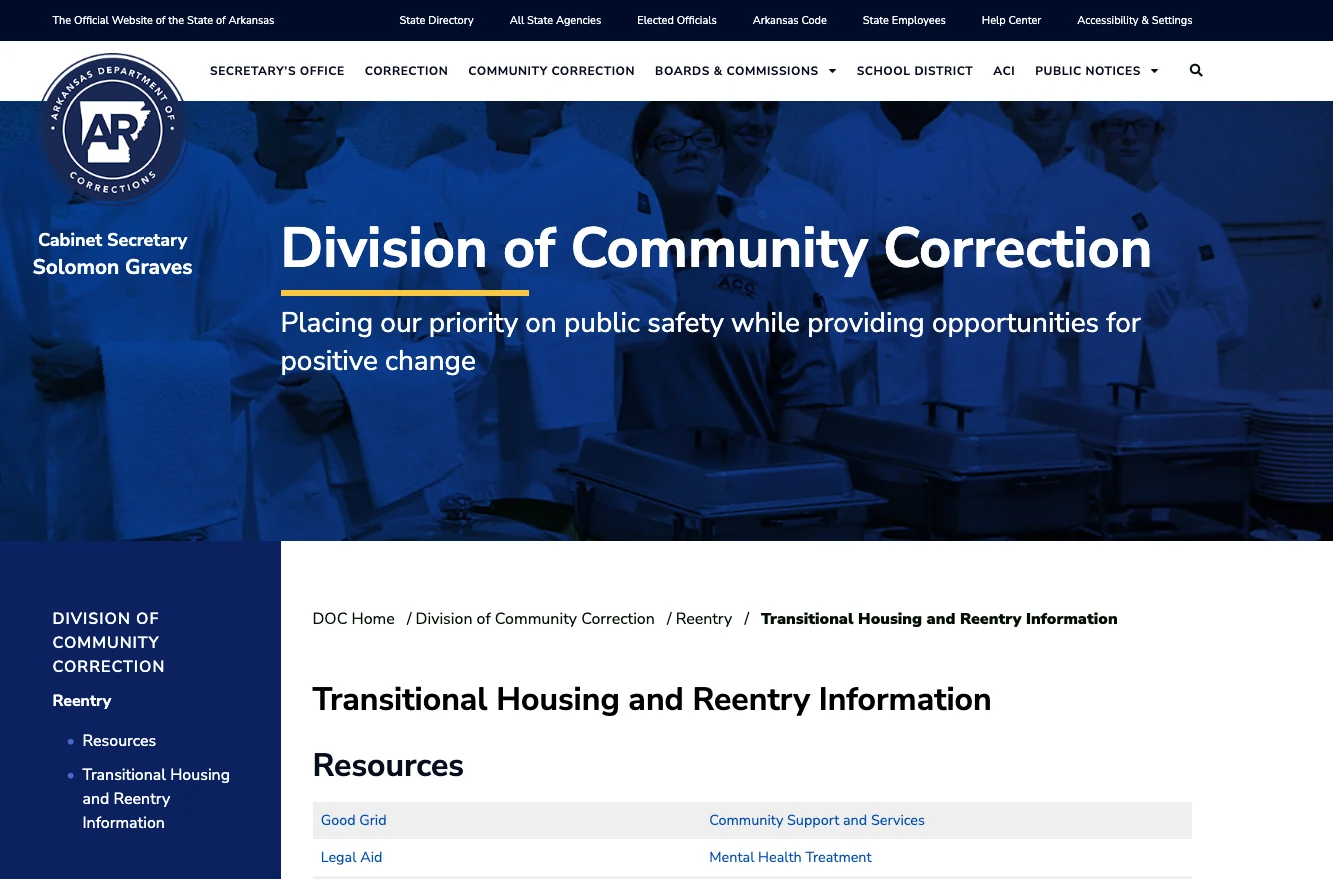
There is one notable exception to the “no license needed” rule. Sober living homes that specifically serve formerly incarcerated individuals on community supervision may need to be licensed through the Arkansas Division of Community Correction. The state maintains a licensing program for reentry and transitional housing facilities that house individuals referred through the corrections system.
Many reentry homes in Arkansas function very similarly to sober living homes. They prohibit drugs and alcohol, encourage participation in community-based recovery programs, and provide structured living. The licensing requirement comes from their connection to the corrections system, not from their recovery housing model. If you plan to accept residents who are referred by parole officers, drug courts, or community correction programs, you should contact the Division of Community Correction to understand whether licensing applies to your specific situation.
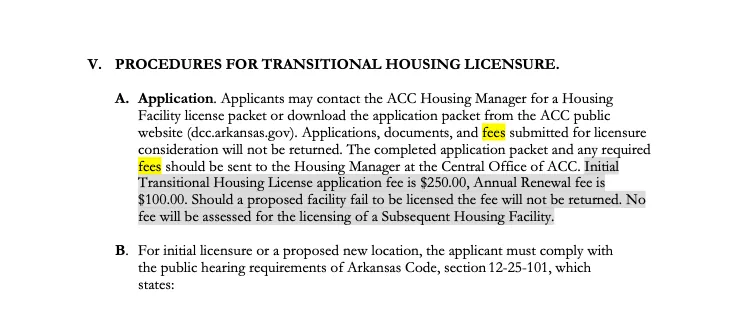
The good news is that even this licensing track is operator-friendly. Application fees are just $250 for the initial application and $100 for annual renewal. There are no per-bed fees. Compared to states where licensing can cost thousands of dollars annually with additional per-bed surcharges, Arkansas keeps costs accessible.
The Regulatory Outlook for Arkansas
As of 2026, there are no pending legislative proposals that would institute mandatory licensing for sober living homes in Arkansas. The state has consistently maintained a hands-off approach to recovery residence regulation. However, the national trend is moving toward greater oversight. States across the country are adopting NARR-aligned certification standards, and it is possible that Arkansas will follow suit in the coming years, especially as opioid settlement funds begin flowing into recovery housing initiatives.
For forward-thinking operators, the current regulatory environment presents an opportunity. By voluntarily adopting NARR standards now, you position your home ahead of any future regulatory requirements. Homes that are already meeting high standards when regulations arrive will face minimal disruption, while homes that have been operating without structure may face costly and time-consuming adjustments. For a broader perspective on how regulations are evolving nationally, read our two-part series on understanding national regulations on sober living homes in the United States.
NARR Certification in Arkansas
The National Alliance for Recovery Residences (NARR) is the leading organization establishing quality standards for recovery housing across the United States. NARR works through state-level affiliate organizations that administer certification programs tailored to local needs. Understanding the NARR landscape in Arkansas is important for operators who want to differentiate their homes and access funding.
Current NARR Affiliate Status in Arkansas
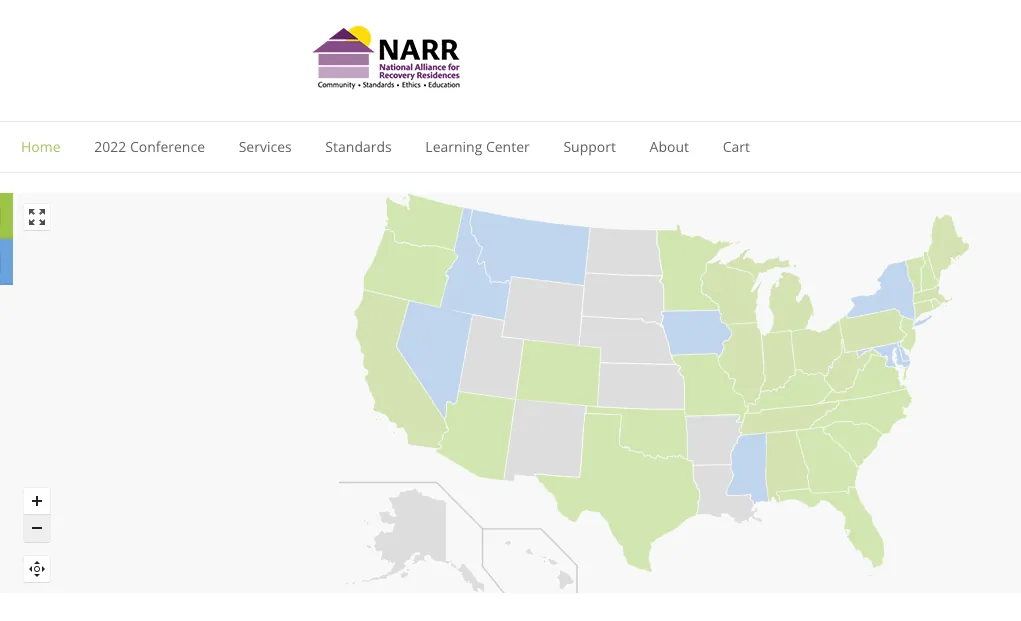
Arkansas does not currently have a well-established, fully active NARR affiliate organization comparable to those in states like Texas (TROHN), Florida (FARR), or Ohio (ORH). For the most current status of any emerging affiliate activity in the state, visit the NARR website or see our detailed overview of the Arkansas NARR state affiliate.
This gap in the NARR network is not unusual. Several states are in various stages of affiliate development, and the absence of a formal state affiliate does not mean Arkansas operators cannot pursue NARR-aligned standards or even direct NARR certification pathways. In fact, the absence of an established affiliate represents an opportunity for motivated operators to help shape the recovery housing landscape in their state.
Why Voluntary Certification Matters
Even without a mandatory state certification requirement, pursuing NARR-aligned standards delivers tangible benefits to Arkansas operators:
Credibility and Referrals. Treatment centers, hospitals, and courts prefer to refer clients to certified recovery residences. When a treatment center is deciding where to send a patient for step-down care, a home that meets NARR standards stands out. This translates directly to higher occupancy rates.
Funding Eligibility. Many federal and state funding programs require or strongly prefer NARR-certified homes. As opioid settlement funds flow into Arkansas over the coming years, homes that can demonstrate adherence to recognized standards will be first in line. SAMHSA grants, HUD recovery housing programs, and state block grant allocations all increasingly favor certified operators.
Resident Safety and Outcomes. NARR’s four-level quality framework (Levels I through IV) provides a roadmap for building progressively more supportive living environments. Level I homes offer peer-run, democratic environments. Level II adds house manager oversight. Level III incorporates paid staff and more structured programming. Level IV provides clinical services. Each level includes specific standards for governance, physical environment, operations, and recovery support. Following these standards improves resident outcomes, which improves retention, reputation, and referral relationships.
Protection Against Future Regulation. When states do adopt mandatory standards, they almost always align with NARR frameworks. Homes already meeting these standards will transition seamlessly. Homes that are not may face costly retrofitting, policy rewrites, and operational changes.
How to Pursue Certification Without a State Affiliate
If there is no fully active state affiliate to certify your home, you have several options. You can contact NARR directly to inquire about certification pathways for operators in states without a full affiliate. You can also adopt NARR standards as your internal operating framework, documenting compliance even without formal certification. This “NARR-aligned” approach positions you well for formal certification when it becomes available.
For operators interested in helping build the recovery housing infrastructure in Arkansas, founding or contributing to a state NARR affiliate is a meaningful way to shape the future of recovery housing in the state. NARR provides resources and guidance for communities interested in establishing new affiliates. For a detailed overview of the certification process and what it involves, see our NARR certification guide.
Step-by-Step: Opening a Sober Living Home in Arkansas
Whether you are opening your first recovery residence or expanding from another state, the following 10-step roadmap will guide you through the process of launching a sober living home in Arkansas. For a general overview that applies to all states, see our comprehensive guide on how to start a sober living home.
Step 1: Define Your Model and Target Population
Before you sign a lease or file a single document, clarify your recovery housing model. Are you opening a Level I peer-run home, a Level II home with a house manager, or a more structured Level III environment? Will you serve men, women, or co-ed populations? Will you focus on young adults, veterans, parents in recovery, or a general adult population?
Arkansas has specific unmet needs. The state’s opioid crisis has created demand for housing that serves individuals transitioning from medication-assisted treatment (MAT) programs. Rural communities across the state have almost no recovery housing options. Defining your niche early helps you choose the right property, develop the right policies, and target the right referral sources.
Step 2: Form Your Business Entity
Register your business with the Arkansas Secretary of State. Most sober living operators choose between an LLC (for flexibility and liability protection) and a nonprofit corporation (for grant eligibility and community trust). File online through the Arkansas Secretary of State’s Business Filing Portal.
If you plan to pursue federal grants or accept donations, incorporate as a 501(c)(3) nonprofit. This process takes several months, so start early. You will also need to obtain an Employer Identification Number (EIN) from the IRS, regardless of your entity type.
Step 3: Obtain a Local Business License
Contact the city clerk or county clerk in the jurisdiction where you plan to operate. Most Arkansas cities and counties require a general business license. Little Rock, Fayetteville, Fort Smith, and Jonesboro each have their own business licensing offices and fee structures. Fees are generally modest, ranging from $25 to $200 depending on the municipality.
Step 4: Secure Your Property
Arkansas real estate is among the most affordable in the nation, which makes property acquisition or leasing very accessible. Look for single-family homes with 4 to 6 bedrooms, at least 2 full bathrooms, a shared living area, and a functional kitchen. Properties should be in residential neighborhoods with access to public transportation, employment centers, and recovery meetings.
Key property considerations for Arkansas:
- Lease vs. Purchase: Many first-time operators start with a lease to minimize upfront capital. Arkansas rental rates for suitable homes are significantly lower than national averages.
- Property Condition: Ensure the property meets local building codes and is in good repair. Deferred maintenance on older homes is common in Arkansas and can create liability issues.
- Neighborhood Context: Choose neighborhoods where residents can walk or drive to meetings, employment, grocery stores, and public services. Avoid isolated locations without community resources.
Step 5: Pass Inspections and Meet Code Requirements
Schedule inspections with your local fire marshal and building code enforcement office. Common requirements include working smoke detectors in every bedroom and hallway, carbon monoxide detectors, fire extinguishers on each floor, two clear means of egress, and adequate plumbing and electrical systems. Some jurisdictions may also require a Certificate of Occupancy that permits the number of residents you plan to house.
Step 6: Develop House Policies and Resident Agreements
Create a comprehensive house manual that covers house rules, drug and alcohol testing protocols, guest policies, curfews, chore assignments, rent payment terms, and the discharge process. Your resident agreement should clearly outline expectations, consequences for violations, and the resident’s rights.
Strong policies protect both residents and operators. They set clear expectations from day one and provide documentation if disputes arise. Model your policies after NARR standards even if formal certification is not yet available in Arkansas.
Step 7: Set Up Financial Systems
Establish a separate business bank account. Set up a system for collecting rent and fees, tracking expenses, managing deposits, and generating financial reports. Many Arkansas operators collect rent weekly or biweekly rather than monthly, as this aligns better with residents’ pay schedules and reduces the risk of large missed payments.
Step 8: Obtain Insurance
At minimum, you need general liability insurance and property insurance (or renter’s insurance if leasing). Many operators also carry professional liability coverage and an umbrella policy. Contact an insurance broker who has experience with recovery housing or group homes. Expect to pay between $1,200 and $3,000 annually for adequate coverage in Arkansas, depending on the size of your home and the coverage limits you select.
Step 9: Build Your Referral Network
Connect with local treatment centers, hospitals, drug courts, probation offices, and recovery community organizations. Introduce your home, share your policies, and explain your admissions process. In Arkansas, key referral sources include:
- Treatment Centers: Facilities in Little Rock, Fayetteville, Springdale, and Fort Smith regularly need step-down housing for discharging clients.
- Drug Courts: Arkansas has drug court programs in many counties that need quality recovery housing for participants.
- Recovery Community Organizations (RCOs): Groups like the Arkansas Recovery Coalition and local AA/NA chapters can connect you with potential residents.
- Hospitals and ERs: Emergency departments frequently encounter individuals in crisis who need recovery housing upon discharge.
Step 10: Open Your Doors and Manage Operations
With your property ready, policies in place, insurance secured, and referral network established, you are ready to accept your first residents. Start with a smaller number of residents than your capacity allows. This lets you refine your operations, train your house manager, and identify issues before scaling up. Focus on delivering a consistent, high-quality experience from day one, because your reputation in the recovery community will drive your occupancy long-term.
Arkansas Startup Costs and Revenue
One of Arkansas’s strongest advantages for sober living operators is its affordability. Startup costs in Arkansas are among the lowest in the nation, which means operators can launch with less capital and achieve profitability faster than in higher-cost states.
Startup Cost Breakdown
| Expense Category | Little Rock | Fayetteville/NW AR | Rural/Smaller Cities |
|---|---|---|---|
| First/Last Month Rent (lease) | $1,400-$2,400 | $1,600-$2,800 | $800-$1,600 |
| Security Deposit | $700-$1,200 | $800-$1,400 | $400-$800 |
| Furnishing (5-6 beds) | $2,000-$4,000 | $2,000-$4,000 | $1,500-$3,000 |
| Business Formation | $50-$300 | $50-$300 | $50-$300 |
| Business License | $25-$200 | $25-$200 | $25-$100 |
| Insurance (annual) | $1,500-$3,000 | $1,500-$3,000 | $1,200-$2,500 |
| Drug Testing Supplies | $200-$500 | $200-$500 | $200-$500 |
| Inspections/Repairs | $500-$2,000 | $500-$2,000 | $300-$1,500 |
| Marketing/Website | $300-$1,000 | $300-$1,000 | $200-$500 |
| Operating Reserve (1 month) | $1,000-$2,000 | $1,000-$2,000 | $700-$1,500 |
| Total Estimated Startup | $7,675-$16,600 | $7,975-$17,200 | $5,375-$12,300 |
Revenue Potential
Arkansas sober living homes typically charge residents between $400 and $800 per month, depending on the market and the level of services provided. Homes in Little Rock and Northwest Arkansas can command the higher end of this range, while homes in smaller cities and rural areas tend to price toward the lower end to remain accessible to their populations.
| Scenario | Monthly Revenue | Monthly Expenses | Monthly Net |
|---|---|---|---|
| 6 beds, $500/mo, 85% occupancy | $2,550 | $1,500-$2,200 | $350-$1,050 |
| 8 beds, $550/mo, 85% occupancy | $3,740 | $1,800-$2,600 | $1,140-$1,940 |
| 10 beds, $600/mo, 90% occupancy | $5,400 | $2,200-$3,200 | $2,200-$3,200 |
A note on occupancy assumptions: The projections above assume established operations with strong referral networks. New operators should realistically expect 40–60% occupancy in their first year as they build referral relationships and community reputation. Plan your finances conservatively around lower initial occupancy rather than these mature-operation figures.
These figures assume a leased property. Operators who purchase property can build equity and eventually reduce their housing costs, improving long-term margins. Monthly operating expenses include rent or mortgage, utilities, insurance, drug testing, cleaning supplies, maintenance, and house manager compensation if applicable.
The key to strong revenue in Arkansas is maintaining high occupancy. Because the market is affordable, residents who have a positive experience tend to stay longer, reducing turnover costs and stabilizing income. Building strong referral relationships is the single most effective way to keep beds full.
Funding for Arkansas Recovery Homes
Arkansas operators have access to several funding streams at the federal, state, and local levels. While the state does not have a dedicated sober living grant program, multiple channels provide financial support for recovery housing initiatives. Important caveat: Most government grants are highly competitive and primarily target established 501(c)(3) organizations with documented operational history, outcome data, and financial audits. First-time operators should plan to self-fund their startup and early operations, and treat grant funding as a longer-term goal rather than an initial funding source. For a comprehensive overview of funding strategies, see our guide on grants for recovery homes and halfway houses.
Opioid Settlement Funds
Arkansas is receiving its share of the national opioid settlement, which totals billions of dollars distributed across all 50 states over approximately 18 years. These funds are designated for addressing the opioid crisis, and recovery housing is an eligible use. Arkansas allocates settlement funds through the state Attorney General’s office and designated advisory boards.
Operators should monitor announcements from the Arkansas Attorney General’s office and the Arkansas Department of Human Services for specific funding opportunities tied to opioid settlement allocations. Recovery housing projects that demonstrate adherence to quality standards (such as NARR alignment) and serve populations disproportionately affected by the opioid crisis are competitive candidates.
SAMHSA Federal Grants
The Substance Abuse and Mental Health Services Administration (SAMHSA) administers several grant programs relevant to recovery housing operators:
- State Opioid Response (SOR) Grants: Distributed to states, which then sub-grant to local organizations. Arkansas DHS administers these funds and may allocate portions to recovery housing providers.
- Block Grants: The Substance Abuse Prevention and Treatment (SAPT) Block Grant provides funding to states for substance abuse services, including recovery support services.
- Targeted Capacity Expansion Grants: Periodically available for specific populations or regions with demonstrated need.
HUD Recovery Housing Program
The U.S. Department of Housing and Urban Development (HUD) allocates funds specifically for recovery housing through Continuum of Care (CoC) programs and other housing assistance channels. Arkansas has several CoC regions that may provide funding for recovery housing operations or resident rental assistance.
State and Local Funding Sources
- Arkansas Department of Human Services, Division of Aging, Adult and Behavioral Health Services: The primary state agency overseeing behavioral health funding. Contact DAABHS directly to inquire about current funding opportunities for recovery housing.
- Local Community Development Block Grants (CDBG): Cities and counties in Arkansas receive federal CDBG funding that can support housing initiatives, including recovery residences, when applications align with community development goals.
- Foundation Grants: Regional foundations and national foundations focused on recovery, mental health, or housing may fund Arkansas-based projects. The Winthrop Rockefeller Foundation and the Arkansas Community Foundation are starting points for research.
Tips for Securing Funding
Nonprofit status (501(c)(3)) significantly increases your eligibility for grants. Even if you start as an LLC, consider forming a companion nonprofit to pursue grant funding. Document your outcomes from day one: occupancy rates, average length of stay, relapse rates, employment rates, and resident satisfaction. Funders want to see data, and homes that track outcomes consistently are far more competitive in grant applications.
Arkansas Recovery Housing Market
Arkansas presents a compelling market opportunity for sober living operators due to the intersection of high need, low supply, and affordable operating costs.
Demand Drivers
Arkansas has been significantly impacted by the substance use and opioid crisis. The state has consistently ranked among the most affected by drug overdose deaths on a per capita basis. The Arkansas Department of Health has reported rising overdose rates, particularly involving fentanyl and methamphetamine. This crisis creates persistent demand for recovery housing as a critical step in the continuum of care between treatment and independent living.
Additionally, Arkansas ranks near the bottom nationally in healthcare access. Limited access to outpatient treatment, recovery support services, and mental health care means that structured recovery housing environments play an even more critical role in supporting long-term recovery for residents.
Key Markets
| Market | Population (Metro) | Opportunity | Notes |
|---|---|---|---|
| Little Rock | ~750,000 | High | State capital, most treatment centers, largest referral network |
| Fayetteville/NW Arkansas | ~600,000 | High | Fastest-growing region, corporate employers (Walmart, Tyson, J.B. Hunt), strong economy |
| Fort Smith | ~280,000 | Moderate-High | Proximity to Oklahoma border, underserved for recovery services |
| Jonesboro | ~135,000 | Moderate | Northeast Arkansas hub, limited recovery housing options |
| Hot Springs | ~100,000 | Moderate | Tourism and healthcare employment, established recovery community |
| Pine Bluff | ~80,000 | Moderate | High need, limited services, very affordable property |
| Texarkana | ~70,000 (AR side) | Moderate | Border city with Texas, draws from two-state area |
Northwest Arkansas deserves particular attention. The Fayetteville-Springdale-Rogers-Bentonville metro area is one of the fastest-growing regions in the country, driven by corporate headquarters, a strong university system, and quality of life. Growth brings both economic opportunity for residents and increasing demand for support services, including recovery housing.
Underserved Populations
Arkansas has notable gaps in recovery housing for women with children, veterans, young adults (18-25), and individuals transitioning from MAT programs. Homes that serve these populations can differentiate themselves and access population-specific funding streams.
Compliance and Best Practices
Even without mandatory state licensing, Arkansas sober living operators must navigate local regulations and adopt best practices that protect their homes, residents, and communities.
Zoning and Fair Housing
Sober living homes are protected under the federal Fair Housing Act (FHA) because individuals in recovery from substance use disorders are classified as persons with disabilities. Cities and counties cannot use zoning laws to exclude sober living homes from residential neighborhoods. Homes with six or fewer unrelated residents often fall within standard single-family residential zoning and may not require special permits or conditional use approvals — but occupancy limits vary by municipality, and some jurisdictions set lower thresholds or impose additional requirements on group living arrangements. Always verify the specific occupancy rules in your city or county before finalizing your resident count.
If your home houses more than your municipality’s occupancy threshold, or if your local jurisdiction attempts to impose special requirements on your home, consult a Fair Housing attorney. The FHA provides strong protections, but enforcement sometimes requires advocacy. The Arkansas Fair Housing Commission and the U.S. Department of Housing and Urban Development (HUD) regional office handle complaints related to housing discrimination against recovery residences.
Fire Safety and Building Codes
Comply with all local fire codes. At minimum, this means:
- Working smoke detectors in every sleeping room and common hallway
- Carbon monoxide detectors on every level
- Fire extinguishers accessible on each floor
- Two unobstructed exits from the building
- Illuminated exit signage (required in some jurisdictions for group living settings)
- Regular documentation of fire safety inspections and drills
Insurance Requirements
Carry adequate insurance to protect your operation. A typical Arkansas sober living insurance package includes:
- General Liability: Covers injuries on your property and third-party claims. Minimum $1 million per occurrence recommended.
- Property Insurance: Covers damage to the structure and contents (if you own the property). If leasing, your landlord carries property insurance, but you should carry renter’s insurance for contents.
- Professional Liability: Sometimes called errors and omissions (E&O) coverage. Protects against claims related to your management decisions.
- Umbrella Policy: Provides additional coverage beyond the limits of your other policies. Strongly recommended for operators managing multiple homes.
Operational Best Practices
Adopt these practices to run a quality operation in Arkansas:
- Drug and Alcohol Testing: Implement a consistent, documented testing protocol. Random testing is more effective than scheduled testing at maintaining house integrity.
- House Meetings: Hold regular house meetings (at least weekly) to address concerns, build community, and reinforce expectations.
- Documentation: Maintain records of resident agreements, rent payments, incident reports, drug test results, and discharge summaries. Good documentation protects you legally and supports funding applications.
- Staff Training: If you employ house managers or staff, provide training on crisis intervention, de-escalation, mandatory reporting obligations, and NARR standards.
- Community Relations: Maintain your property, manage noise, and communicate proactively with neighbors. Good community relationships prevent complaints and zoning challenges.
How Sober Living App Helps Arkansas Operators
Sober Living App is purpose-built management software for recovery residence operators. Whether you are running a single home in Little Rock or managing a portfolio across multiple Arkansas cities, the platform streamlines the operational complexity of sober living management.
The app handles rent collection and payment tracking, admissions and intake documentation, resident management and progress notes, drug testing schedules and result logging, bed management and occupancy tracking, staff coordination and task assignment, alumni tracking and engagement, and reporting for funders and stakeholders.
For Arkansas operators starting lean, the app eliminates the need for spreadsheets, paper logs, and manual processes. For growing organizations, it provides the infrastructure to scale without adding administrative overhead.
Start your free trial today and see why recovery housing operators across the country trust Sober Living App to manage their homes.
Frequently Asked Questions
Do I need a license to open a sober living home in Arkansas?
Arkansas does not require a specific state license or certification for basic sober living homes at the state level. However, cities and counties may impose their own local requirements — including group home, boarding home, or zoning ordinances — so you must verify all applicable local regulations with your municipality. Voluntary NARR certification through the state affiliate is recommended for credibility and funding access. Consult a qualified local attorney before opening.
How much does it cost to start a sober living home in Arkansas?
Startup costs in Arkansas typically range from $6,000-$25,000, among the lowest in the nation due to affordable real estate. Little Rock and Fayetteville are more expensive, while smaller cities offer very affordable entry points.
What funding is available for Arkansas sober living homes?
Arkansas operators can pursue SAMHSA grants, HUD Recovery Housing Program funds, and state opioid settlement allocations. These grants are highly competitive and primarily target established 501(c)(3) organizations with documented track records. Contact the Arkansas Department of Human Services, Division of Aging, Adult and Behavioral Health Services for state-specific opportunities. New operators should plan to self-fund initially.
Why is Arkansas a good state for opening a sober living home?
Arkansas offers low barriers to entry with no mandatory certification at the state level, very affordable real estate, growing demand due to opioid crisis impact, and less market saturation than larger states. The low cost of living allows operators to keep resident fees accessible while maintaining profitability. Note that local municipalities may have their own requirements, so always verify local regulations before opening.
What are the best markets for sober living in Arkansas?
Little Rock, Fayetteville/Northwest Arkansas, Fort Smith, Jonesboro, and Hot Springs all have demand for recovery housing. Northwest Arkansas (Fayetteville-Springdale-Rogers) is one of the fastest-growing metro areas in the state.
Manage your homes more efficiently
From admissions to discharge, Sober Living App streamlines every aspect of running recovery residences.
Related Articles
How to Start a Sober Living Home: Complete 2026 Guide for Operators
Step-by-step guide to starting a sober living home in 2026. Learn startup costs ($50K-150K), revenue potential ($1,500-3,500/bed), licensing by state, and how to reach profitability in 6-18 months.
Arkansas NARR State Affiliate | Recovery Housing Certification Guide
Arkansas recovery housing certification guide. No NARR affiliate yet - learn about national certification options and what to expect for sober living homes.

Grants for Recovery Homes: Funding Guide [2026]
Apply for $50K-$500K federal grants (SAMHSA, HUD, DOJ), state opioid settlement funds, and foundation grants for recovery housing. Step-by-step application guide.