
How to Start a Sober Living Home in California: 2026 Complete Guide
Start a sober living home in California with our 2026 guide. Get licensing requirements, startup costs, CCAPP certification & funding options. Free checklist!

Legal Disclaimer
This article provides general information for educational purposes only. It is not legal, financial, or compliance advice. Recovery housing regulations vary by state, county, and municipality. You must consult with a qualified local attorney and your municipality's code enforcement office to confirm all requirements at every level of jurisdiction. Regulations change frequently — always verify current requirements directly with relevant government agencies.
How to Start a Sober Living Home in California: 2026 Complete Guide
Starting a sober living home in California presents an incredible opportunity in 2026. With over 3.8 million Californians struggling with substance use disorders and limited affordable housing options, the demand for quality recovery residences has never been higher.
California’s regulatory environment remains one of the most business-friendly in the nation for sober living operators. Unlike states with heavy licensure requirements, California allows you to focus on what matters most: creating a supportive environment for people in recovery. For comparison, check out our guides for opening a sober living home in Ohio or Florida, which have different regulatory frameworks.
But here’s what most guides won’t tell you: successful, established sober living homes in California can generate $15,000-45,000 monthly revenue with proper planning and management — though new operators should expect to build toward these numbers over 12-18 months as occupancy and referral networks grow. The key lies in understanding the nuances of state regulations, local zoning laws, and building sustainable operations from day one.
This comprehensive guide covers everything you need to know about starting a sober living home in California in 2026, including updated regulations, startup costs, funding opportunities, and the CCAPP certification process that can set your facility apart.
Whether you’re a recovery professional looking to expand services or an entrepreneur passionate about helping others, this step-by-step roadmap will help you build a thriving sober living business while making a meaningful impact in your community.
California Sober Living Regulations: What You Need to Know in 2026
Good news for aspiring operators: California remains one of the least regulated states for sober living homes at the state level. Most facilities with six or fewer residents that don’t provide medical or therapeutic services are exempt from state licensure requirements through the Department of Health Care Services (DHCS). However, many cities and counties impose their own registration, permitting, or operational requirements that go beyond state law. Always check with your local municipality’s planning and code enforcement offices for additional requirements that may apply.
This doesn’t mean you can operate without oversight. Here’s what the California Department of Health Care Services (DHCS) requires:
Services That Trigger Licensing Requirements
Your sober living home will need a DHCS license if you provide any of the following services:
- 24/7 non-medical residential alcoholism or drug abuse recovery services
- Detoxification services
- Group therapy or counseling sessions
- Individual counseling or therapy sessions
- Educational sessions focused on addiction recovery
- Treatment or recovery planning services
According to DHCS, providing just one of these services classifies your facility as a residential treatment program requiring full state licensure.
What You CAN Provide Without Licensing
The following activities are generally acceptable in unlicensed sober living homes:
- House meetings about chores, rules, and conflict resolution
- Peer support and accountability
- Transportation to external treatment programs
- Basic life skills support
- Structured living environment with rules and curfews
- Drug and alcohol testing
Recent Legislative Updates (2024)
State Senator Tom Umberg’s recent bill gives California cities more enforcement power over sober living homes that become public nuisances. This means local compliance is more important than ever.
Key changes include:
- Stricter local zoning enforcement
- Enhanced neighbor complaint procedures
- Increased penalties for non-compliant operators
- Greater emphasis on community integration
The California Consortium of Addiction Programs and Professionals (CCAPP) recommends joining their organization to stay current on regulatory changes. CCAPP has aligned with National Alliance of Recovery Residences (NARR) standards, providing a clear certification pathway. Learn more about California’s NARR state affiliate and recent NARR rules and regulations updates. For broader context, review our analysis of national regulations on sober living homes.
Step-by-Step Guide: How to Start Your Sober Living Home
Step 1: Develop Your Business Plan and Financial Projections
Before finding property or dealing with regulations, create a comprehensive business plan. California’s competitive market demands strategic thinking from day one.
Revenue Projections:
- 6-bed facility: $9,000-18,000/month ($1,500-3,000 per bed)
- 12-bed facility: $18,000-36,000/month
- 20-bed facility: $30,000-60,000/month
Key Business Decisions:
- Target demographic (court-ordered, private-pay, insurance-covered)
- Facility size and structure (single-family home vs. multi-unit)
- Geographic focus (urban vs. suburban markets)
- Service level (basic housing vs. enhanced programming)
Step 2: Secure Funding and Calculate Startup Costs
Starting a sober living home in California requires significant upfront investment. Here’s a realistic breakdown:
| Expense Category | Cost Range | Notes |
|---|---|---|
| Property down payment | $50,000-200,000 | Varies by location |
| Security deposits/first months | $10,000-30,000 | If leasing |
| Renovations/safety upgrades | $15,000-50,000 | Fire safety, ADA compliance |
| Furnishing and equipment | $10,000-25,000 | Beds, kitchen, common areas |
| Insurance (first year) | $5,000-15,000 | Liability, property |
| Legal and professional fees | $5,000-10,000 | Attorneys, accountants |
| Marketing and technology | $3,000-8,000 | Website, management software |
| Operating capital | $20,000-40,000 | 3-6 months expenses |
| Total Startup Investment | $118,000-378,000 | Varies significantly by location |
Step 3: Choose Your Location and Understand Zoning
Location selection makes or breaks sober living operations in California. Consider these factors:
Ideal Neighborhoods:
- Residential areas with good public transportation
- Proximity to treatment centers and employment opportunities
- Supportive community attitudes toward recovery housing
- Reasonable rent/purchase prices relative to market rates
Zoning Considerations:
- Single-family residential zones typically allow up to 6 unrelated adults, but this number varies by municipality — some cities define “family” differently or set different occupancy caps. Verify your specific city’s definition of “family” and occupancy limits with a local land use attorney before selecting a property.
- Multi-family zones may accommodate larger facilities
- Some cities have spacing requirements between sober living homes
- Check for any local ordinances restricting recovery housing
High-Opportunity Markets in California:
- Sacramento: Growing recovery community, affordable housing
- Fresno: Lower costs, strong treatment infrastructure
- San Diego suburbs: High demand, supportive regulations
- Central Valley communities: Emerging markets with less competition
Step 4: Obtain Necessary Permits and Licenses
While sober living homes generally don’t require state-level licenses (assuming no clinical services are provided), cities and counties may impose their own registration or permitting requirements. In addition, you’ll need several standard permits:
Required Permits:
- Business license from your city/county
- Fictitious business name (if applicable)
- Federal EIN and state tax registrations
- Fire department inspection and approval
- Building permits for any renovations
Optional but Recommended:
- CCAPP Recovery Residence Certification
- NARR Level 1-4 designation
- Better Business Bureau membership
- Local housing association memberships
Step 5: Secure Insurance Coverage
Insurance protects your investment and provides liability coverage. California sober living homes need:
Essential Coverage Types:
- General liability: $1-2 million per occurrence
- Property insurance: Full replacement value
- Directors and officers: If operating as corporation
- Employment practices liability: If hiring staff
- Cyber liability: For resident data protection
Specialized Providers: Several insurance companies specialize in recovery housing. Expect to pay $5,000-15,000 annually depending on facility size and coverage limits.
Financial Planning and Funding Opportunities
Revenue Streams and Pricing Strategies
Successful California sober living homes diversify income sources:
Primary Revenue:
- Resident fees: $1,200-3,500/month per bed
- Application and security deposits
- Late fees and additional services
Supplemental Income:
- Government housing vouchers (Section 8, VASH)
- Insurance reimbursements for covered residents
- Partnership fees from treatment centers
- Grant funding for specific populations
Available Funding Sources
Government Grants:
- SAMHSA grants for substance abuse programs
- HUD Community Development Block Grants
- California Opioid Settlement funds
- Local housing authority partnerships
Private Funding:
- Treatment center partnerships
- Faith-based organization support
- Recovery-focused foundations
- Community development financial institutions
Alternative Financing:
- SBA loans for business development
- Equipment financing for furnishings
- Investor partnerships
- Crowdfunding for startup capital
Financial Management Best Practices
Implement these systems from day one:
- Separate business and personal finances completely
- Use specialized sober living management software to track occupancy and payments
- Maintain 3-6 months operating expenses in reserve
- Document all resident interactions and financial transactions
- Work with accountants familiar with recovery housing
CCAPP Certification: Your Competitive Advantage
The California Consortium of Addiction Programs and Professionals (CCAPP) offers the state’s only Department of Health Care Services-recognized certification for recovery residences.
Benefits of CCAPP Certification
Credibility and Trust:
- Third-party validation of quality standards
- Enhanced reputation with treatment providers
- Preferred status with referring agencies
- Professional recognition in recovery community
Business Advantages:
- Higher occupancy rates
- Premium pricing opportunities
- Access to exclusive referral networks
- Grant funding preferences
CCAPP Certification Requirements
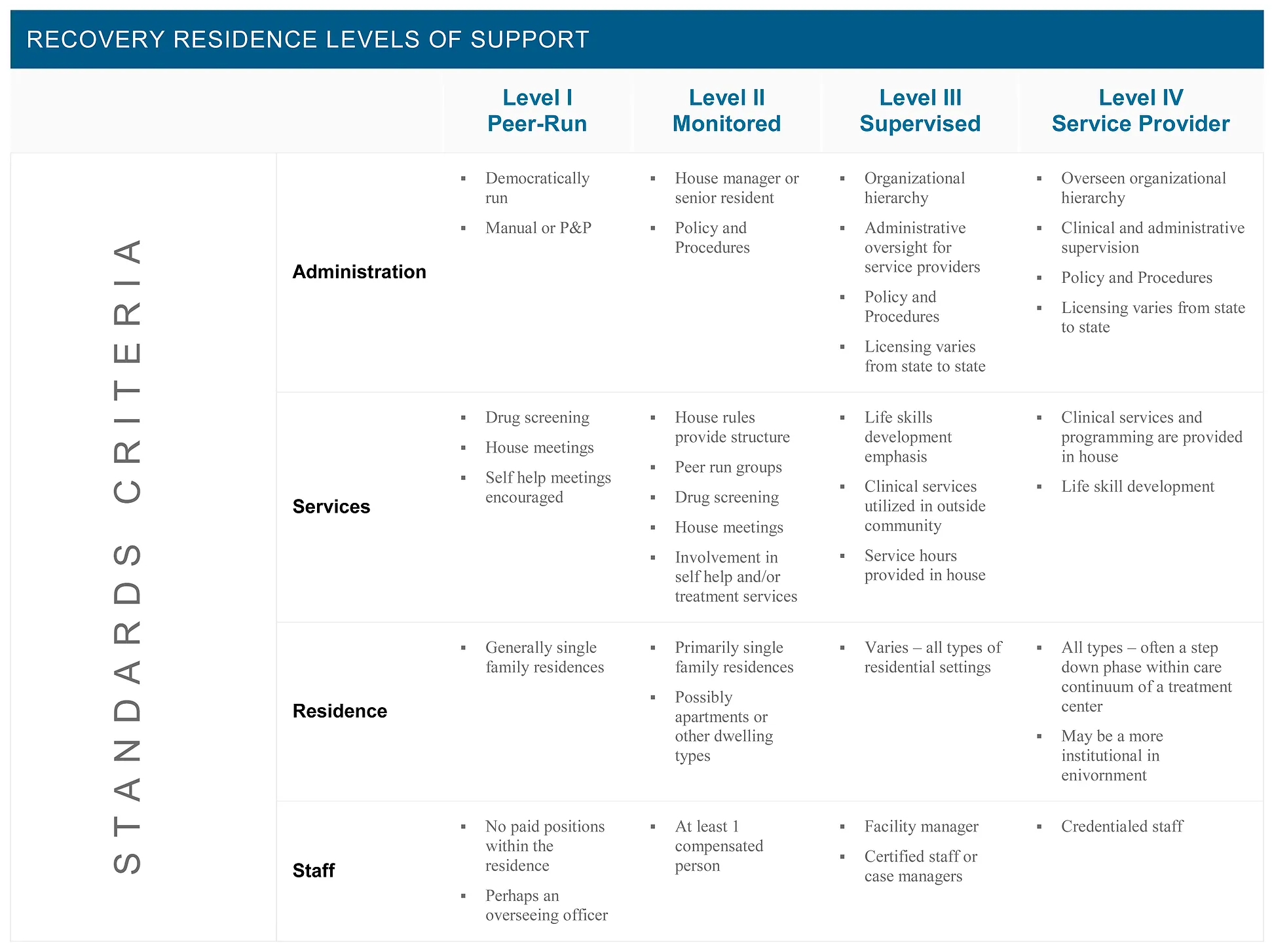
CCAPP has aligned with NARR standards, offering four levels:
Level I - Peer-Run Facilities:
- Minimal staffing requirements
- Basic house rules and structure
- Peer accountability focus
- Entry-level certification
Level II - Monitored Facilities:
- On-site house manager required
- Regular drug/alcohol testing
- Structured programming
- Most common certification level
Level III - Supervised Facilities:
- Clinical oversight required
- Enhanced programming
- Higher staff-to-resident ratios
- Premium service level
Level IV - Service-Intensive Facilities:
- Clinical services on-site
- May require state licensing
- Highest level of support
- Specialized populations
Certification Process Timeline
- Application Submission: 2-4 weeks preparation
- Initial Review: 30-45 days processing
- Site Visit: Scheduled within 60 days
- Certification Decision: 2-3 weeks post-visit
- Annual Renewal: Ongoing compliance required
Certification Costs:
- Application fee: $500-1,500 (varies by level)
- Annual maintenance: $300-800
- Site visit fees: $200-500
Property Selection and Setup Considerations
Choosing the Right Property Type
Single-Family Homes (6 beds or fewer):
- Advantages: Residential feel, easier zoning compliance, lower startup costs
- Disadvantages: Limited revenue potential, harder to achieve economies of scale
- Best for: First-time operators, specialized populations
Multi-Unit Properties (7+ beds):
- Advantages: Higher revenue potential, operational efficiencies, professional appearance
- Disadvantages: Complex regulations, higher startup costs, zoning challenges
- Best for: Experienced operators, high-demand markets
Essential Property Features
Safety Requirements:
- Adequate fire exits and safety equipment
- Secure medication storage areas
- Privacy for drug testing
- ADA accessibility features
- Proper lighting and security
Operational Considerations:
- Common areas for meetings and activities
- Adequate parking for residents and staff
- Kitchen facilities for meal preparation
- Laundry access on-site or nearby
- Public transportation accessibility
Neighborhood Factors:
- Distance from schools and daycares (some cities have restrictions)
- Proximity to employment opportunities
- Access to healthcare and social services
- Community acceptance of recovery housing
- Safety and crime statistics
Operational Excellence: Policies and Procedures
Developing House Rules and Resident Agreements
Create comprehensive policies covering:
Sobriety Requirements:
- Zero tolerance drug and alcohol policy
- Random testing procedures
- Consequences for positive tests
- Relapse response protocols
House Rules:
- Curfew and visitor policies
- Cleaning and maintenance responsibilities
- Noise and behavior standards
- Communication and conflict resolution
Financial Policies:
- Rent payment schedules and methods
- Late fee structures
- Security deposit requirements
- Refund and termination policies
Staffing Considerations
Essential Staff Roles:
- House Manager: On-site supervision and administration
- Assistant Manager: Coverage and resident support
- Maintenance Personnel: Property upkeep
- Administrative Support: Billing, documentation
Staffing Ratios:
- Level I facilities: Minimal staffing required
- Level II facilities: 1 staff per 10-15 residents
- Level III+ facilities: Enhanced ratios based on needs
Key Qualifications:
- Recovery experience (personal or professional)
- Strong communication and conflict resolution skills
- Understanding of addiction and mental health issues
- Ability to maintain professional boundaries
Technology and Management Systems
Modern sober living operations require efficient systems. Our comprehensive management platform handles these complex operational details:
Management Software Features:
- Bed management and occupancy tracking
- Resident admissions processing
- Billing and payment processing
- Drug testing result tracking
- Incident reporting and documentation
Communication Tools:
- Resident portals for announcements
- Staff communication platforms
- Family update systems
- Emergency notification capabilities
Common Mistakes to Avoid
Legal and Regulatory Pitfalls
-
Providing unlicensed clinical services
- Solution: Clearly define scope of services, partner with licensed providers
-
Ignoring local zoning requirements
- Solution: Research thoroughly before signing leases or purchases
-
Inadequate insurance coverage
- Solution: Work with specialized insurance agents
-
Poor documentation practices
- Solution: Implement comprehensive record-keeping from day one
Operational Challenges
-
Underestimating startup costs
- Solution: Budget for 6 months of operations before break-even
-
Inadequate screening procedures
- Solution: Develop thorough admission criteria and background checks
-
Insufficient staff training
- Solution: Invest in comprehensive training programs
-
Poor community relations
- Solution: Proactively engage with neighbors and local officials
Success Stories: California Sober Living Operations
Case Study 1: Sacramento Recovery Residence
Background: Former treatment center director opened 8-bed facility in 2022 Investment: $180,000 initial capital Results: 92% occupancy rate, $22,000 monthly revenue, CCAPP Level II certified
Note: These results represent a best-case scenario from an operator with years of treatment industry experience and established referral networks. New operators should expect significantly lower occupancy (40–60%) during the first year while building relationships and reputation. It typically takes 12–18 months to reach stable, high occupancy.
Key Success Factors:
- Strong relationships with local treatment providers
- Comprehensive admission screening process
- Active community engagement and transparency
- Professional management systems from startup
Case Study 2: San Diego Transitional Housing Network
Background: Non-profit organization expanded from treatment services Investment: $350,000 for two properties (16 total beds) Results: 18-month wait list, $38,000 monthly revenue, multiple grants secured
Note: This non-profit had an existing treatment services operation, established community relationships, and grant funding before launching recovery housing. These revenue figures reflect a mature, well-networked operation — not a typical first-year outcome. New operators without existing referral pipelines should plan for 40–60% occupancy in year one and budget accordingly.
Key Success Factors:
- Non-profit status enabled grant funding
- Evidence-based programming model
- Strong board of directors with community connections
- Comprehensive wraparound services partnerships
Frequently Asked Questions
Do I need a license to operate a sober living home in California?
Most sober living homes in California don’t require state-level licenses if they house six or fewer residents and don’t provide clinical services. However, you’ll need basic business licenses and must comply with local zoning laws. Many cities and counties have their own registration, permitting, or operational requirements — always check with your local municipality for additional obligations beyond state law.
How much money do I need to start a sober living home in California?
Startup costs typically range from $118,000 to $378,000, depending on property costs, facility size, and location. This includes down payments, renovations, furnishing, insurance, and 3-6 months of operating capital.
What’s the difference between CCAPP and NARR certification?
CCAPP is California’s state-recognized certification body that has aligned with NARR (National Alliance of Recovery Residences) standards. CCAPP certification is specific to California and provides the most credibility with local partners.
Can I accept residents with Section 8 vouchers?
Yes, California sober living homes can accept housing vouchers, but you must comply with fair housing laws and HUD regulations. This can provide steady income and help residents afford quality housing.
How do I handle residents who relapse?
Develop clear relapse policies before opening. Most facilities require immediate departure after positive drug tests, but some offer second chances with increased supervision. Document all incidents thoroughly and follow your written policies consistently.
What insurance do I need for a sober living home?
Essential coverage includes general liability ($1-2 million), property insurance, and possibly directors/officers coverage. Specialized recovery housing insurance providers understand the unique risks and can offer tailored coverage.
How do I find quality residents?
Build relationships with treatment centers, court systems, probation departments, and healthcare providers. Maintain high standards during admissions screening, including background checks, income verification, and treatment history review.
What’s the typical profit margin for sober living homes?
Well-managed facilities typically achieve 20-35% profit margins after reaching stable occupancy (usually 6-12 months). Revenue ranges from $1,200-3,500 per bed monthly, with expenses including staffing, utilities, maintenance, and debt service. These figures assume established referral networks and high occupancy. New operators should expect significantly lower margins — and potentially operating at a loss — during the first 12-18 months while building occupancy from an initial 40-60% rate.
Can I operate multiple sober living homes?
Yes, many successful operators run multiple facilities. Start with one property, perfect your systems, then expand. Each additional property must comply with zoning laws and may trigger different regulatory requirements.
How do I deal with neighborhood complaints?
Proactive community engagement is key. Attend neighborhood meetings, maintain property appearance, address issues quickly, and provide contact information for concerns. Consider forming a community advisory board for ongoing dialogue.
California Sober Living Home Regulations FAQ
These frequently asked questions address the most common regulatory and compliance questions about starting a sober living home in California.
Do you need a license to open a sober living home in California?
No, California does not require a state-level license to operate a sober living home if your facility meets specific criteria. Homes with six or fewer residents that provide only housing and peer support — without clinical, medical, or therapeutic services — are exempt from Department of Health Care Services (DHCS) licensure requirements.
However, many cities and counties impose their own registration, permitting, or operational requirements that go beyond state law. For example, some municipalities require sober living home registration, operational permits, or compliance with specific local ordinances. Always verify requirements with your local city or county before opening.
You will also need:
- Business license from your local city or county
- Fire department inspection and safety compliance
- Building permits for any renovations or modifications
- Federal EIN for tax purposes
- Any additional local permits required by your specific municipality
If you provide any clinical services (group therapy, counseling, treatment planning, or detoxification), your facility must be licensed as a residential treatment program. The line is clear: housing and peer support require no state license; clinical services require full DHCS licensure.
What are the zoning requirements for sober living homes in California?
California zoning for sober living homes varies significantly by city and county, but state and federal fair housing laws provide important protections:
State Fair Housing Protections:
- The California Fair Employment and Housing Act (FEHA) protects people in recovery as disabled individuals
- Cities cannot zone out or discriminate against recovery residences
- Single-family residential zones must allow sober living homes under the same rules as any household
Common Local Requirements:
- Occupancy limits: Many residential zones permit up to 6 unrelated adults without special permits, but this varies significantly by municipality. Some cities define “family” more broadly or narrowly, and occupancy caps differ. You must verify your specific city’s definition of “family” and occupancy limits with a local land use attorney before selecting a property.
- Spacing requirements: Some cities require minimum distances (often 300-1,000 feet) between recovery residences
- Parking minimums: May require one parking space per resident
- Owner-occupancy: Some ordinances require an owner or manager to live on-site
Key Cities with Specific Regulations:
- Costa Mesa: Strict spacing and operational requirements
- San Diego: Registration requirements for some districts
- Los Angeles: Generally permissive, but check specific neighborhood overlays
Always verify zoning requirements with your local planning department before signing a lease or purchase agreement.
How much does it cost to start a sober living home in California?
Starting a sober living home in California typically requires $118,000 to $378,000 in total startup capital, depending on location, property type, and facility size.
Detailed Cost Breakdown:
| Category | Low Estimate | High Estimate |
|---|---|---|
| Property (down payment or first/last/deposit) | $50,000 | $200,000 |
| Renovations and safety upgrades | $15,000 | $50,000 |
| Furniture, beds, and equipment | $10,000 | $25,000 |
| Insurance (first year) | $5,000 | $15,000 |
| Legal and professional fees | $5,000 | $10,000 |
| Marketing and technology | $3,000 | $8,000 |
| CCAPP certification fees | $1,000 | $3,000 |
| Operating capital (3-6 months) | $20,000 | $40,000 |
| Total | $109,000 | $351,000 |
Cost Variables by Region:
- Bay Area: Expect costs 40-60% higher than state average
- Los Angeles Metro: 20-40% above average
- Central Valley/Inland Empire: Often 20-30% below average
- Sacramento Region: Near state average
Monthly operating costs typically run $8,000-25,000 depending on facility size, staffing, and mortgage/rent obligations.
What insurance do I need for a California sober living home?
California sober living homes require comprehensive insurance coverage to protect against liability, property damage, and operational risks. Most lenders and certification bodies require proof of insurance.
Essential Coverage Types:
| Insurance Type | Recommended Coverage | Annual Cost Range |
|---|---|---|
| General Liability | $1-2 million per occurrence | $2,000-5,000 |
| Property Insurance | Full replacement value | $1,500-4,000 |
| Professional Liability | $500K-1 million | $1,000-3,000 |
| Workers’ Compensation | State minimums (if employees) | $1,500-5,000 |
| Directors & Officers | $500K-1 million | $500-2,000 |
| Cyber Liability | $250K-500K | $500-1,500 |
Total Annual Insurance Costs: $5,000-15,000+ depending on facility size and coverage limits
Specialized Providers: Several insurance companies specialize in recovery housing and understand the unique risks involved. Look for carriers with experience in:
- Behavioral health facilities
- Group living environments
- Addiction recovery services
Coverage Considerations:
- Ensure your policy covers resident-on-resident incidents
- Verify coverage for medication storage and administration
- Include coverage for transportation if you provide rides to treatment
- Consider umbrella policies for additional liability protection
Does California require NARR certification for sober living homes?
California does not legally require NARR (National Alliance of Recovery Residences) certification to operate a sober living home. However, certification through CCAPP (California Consortium of Addiction Programs and Professionals)—which uses NARR standards—provides significant business advantages.
CCAPP/NARR Certification Levels:
| Level | Description | Requirements |
|---|---|---|
| Level I | Peer-run | Minimal staffing, basic house rules |
| Level II | Monitored | On-site manager, drug testing protocols |
| Level III | Supervised | Clinical oversight, structured programming |
| Level IV | Service-provider | On-site clinical services (may require licensing) |
Why Certification Matters:
- Treatment center referrals: Many facilities only refer to certified homes
- Insurance partnerships: Some payers require certification for reimbursement
- Grant eligibility: Government and foundation grants often require certification
- Legal protection: Demonstrates professional standards if disputes arise
- Premium pricing: Certified homes typically charge 15-25% higher rates
Certification Timeline and Costs:
- Application preparation: 2-4 weeks
- Review and site visit: 60-90 days
- Initial certification fee: $500-1,500
- Annual renewal: $300-800
While not required, certification through CCAPP (California’s NARR affiliate) is strongly recommended for operators planning to work with treatment centers, accept insurance, or pursue grant funding.
Can I get funding or grants to open a sober living home in California?
Yes, several funding sources are available for California sober living home startups, though most grants require specific qualifications such as non-profit status or serving priority populations.
Government Funding Sources:
| Source | Amount Range | Requirements |
|---|---|---|
| SAMHSA Recovery Housing Grants | $100K-500K | Non-profit, serve specific populations |
| California Opioid Settlement Funds | Varies by county | Application through county behavioral health |
| HUD Community Development Block Grants | $25K-200K | Non-profit, low-income focus |
| VA SSVF (Veterans) | Per-resident reimbursement | Serve veterans, meet VA requirements |
Private and Alternative Funding:
- Treatment center partnerships: Some will provide startup capital for guaranteed referral relationships
- Community Development Financial Institutions (CDFIs): Offer lower-interest loans for community benefit projects
- Recovery-focused foundations: Organizations like the Hazelden Betty Ford Foundation occasionally fund new recovery housing
- Crowdfunding: Platforms like GoFundMe have funded some recovery housing startups
Traditional Financing:
- SBA 7(a) loans: For established operators expanding facilities
- Commercial real estate loans: Require 20-30% down payment
- Equipment financing: For furniture and technology purchases
- Investor partnerships: Common for multi-home operations
Improving Your Funding Prospects:
- Obtain CCAPP certification before applying for grants
- Develop relationships with county behavioral health departments
- Consider non-profit structure for maximum grant eligibility
- Document community need with local data and treatment provider endorsements
What are the ADA requirements for California sober living homes?
California sober living homes must comply with both federal Americans with Disabilities Act (ADA) requirements and California’s more stringent accessibility standards under Title 24 of the California Building Code.
Who Must Comply:
- All facilities with 4+ beds built after 1991
- Any facility receiving federal funding (including vouchers)
- Properties undergoing substantial renovations
- Facilities serving residents with mobility impairments
Key ADA Requirements:
| Area | Federal ADA | California Title 24 |
|---|---|---|
| Accessible entrance | 1 minimum | At least 1 primary entrance |
| Accessible bathroom | 1 minimum | 1 per 20 beds or fraction |
| Accessible bedroom | 1 minimum | 1 per 25 beds or fraction |
| Door width | 32” clear | 32” clear (34” preferred) |
| Hallway width | 36” minimum | 44” minimum |
| Grab bars | Required in accessible units | Required, specific placement |
Common Compliance Investments:
- Ramp installation: $1,500-5,000
- Accessible bathroom renovation: $5,000-15,000
- Door widening: $500-1,500 per door
- Grab bar installation: $200-500 per bathroom
Reasonable Accommodations: Even if your facility isn’t fully ADA-compliant, you must make “reasonable accommodations” for residents with disabilities. This includes:
- Allowing service animals despite pet policies
- Modifying rules for residents with medical needs
- Adjusting physical spaces when feasible
Exemptions:
- Owner-occupied buildings with 4 or fewer units
- Single-family homes rented without a broker (limited exemptions)
- Historic buildings (partial exemptions with alternatives)
Consult with a California-licensed architect or ADA compliance specialist before purchasing or renovating property.
How many residents can a California sober living home have?
The number of residents a California sober living home can accommodate depends on zoning regulations, building codes, and your facility’s physical specifications.
General Guidelines:
| Factor | Typical Limit | Notes |
|---|---|---|
| Residential zoning | Often 6 unrelated adults* | Single-family zones — varies by municipality |
| Multi-family zoning | 8-20+ residents | Depends on unit count and type |
| Building code | 1 person per 70 sq ft | Sleeping areas only |
| Fire code | Based on egress capacity | Exit width and count |
| Bathroom ratio | 1 bathroom per 4-6 residents | Common requirement |
*Occupancy limits and definitions of “family” vary significantly by city and county. Some municipalities allow more, some fewer. Always verify with your local planning department and consult a land use attorney before committing to a property.
Zoning Strategies for Larger Facilities:
- Multi-family properties: Duplexes, triplexes allow more residents legally
- Commercial/institutional zones: May permit larger recovery residences
- Conditional use permits: Some cities grant exceptions for recovery housing
- Multiple small homes: Many operators run several 6-bed homes rather than one large facility
Practical Considerations:
- CCAPP standards: Recommend no more than 2-4 residents per bedroom
- Bathroom access: At least 1 full bathroom per 4 residents
- Common space: Adequate living room and kitchen for all residents
- Parking: Most cities require 1 space per resident or staff member
Scaling Your Operation: Many successful California operators start with a single 6-bed home, then expand to multiple properties once systems and referral relationships are established. This approach:
- Minimizes regulatory complexity
- Reduces financial risk
- Allows for market testing
- Builds operational expertise before scaling
The optimal size depends on your business model, target population, and local market conditions. Higher-end private-pay facilities often keep census at 6-8 for a more intimate environment, while court-referred or scholarship-based homes may operate larger facilities for economies of scale.
Your Next Steps to Success
Starting a sober living home in California offers tremendous potential for both financial success and meaningful community impact. The state’s favorable regulatory environment, combined with high demand for quality recovery housing, creates exceptional opportunities for dedicated operators.
Immediate Action Items:
-
Research Your Local Market - Visit existing facilities, talk to treatment providers, and assess competition in your target area.
-
Develop Your Business Plan - Use the financial projections and cost estimates in this guide to create realistic projections.
-
Secure Initial Funding - Whether through personal investment, loans, or partners, ensure adequate capital before proceeding.
-
Connect with CCAPP - Join the California Consortium of Addiction Programs and Professionals to access resources and stay current on regulations.
-
Find Your Property - Start your search with clear criteria based on your business plan and target market.
Long-term Success Strategies:
- Build strong relationships with treatment providers and referral sources
- Invest in quality management systems and staff training
- Maintain compliance with all regulations and certifications
- Focus on creating genuine value for residents and community
- Plan for growth and expansion once your first facility stabilizes
The recovery housing industry in California will continue growing as awareness of addiction treatment needs expands. Position yourself now to capture this opportunity while making a lasting difference in people’s lives.
How Sober Living App Can Help You Succeed
At Sober Living App, we’ve helped hundreds of California operators build successful recovery housing businesses. Our comprehensive management platform handles the complex operational details so you can focus on creating supportive environments for recovery.
Our Platform Includes:
-
Comprehensive Admissions Management - Streamline your intake process with digital applications, document collection, and resident onboarding workflows.
-
Intelligent Bed Management - Track occupancy, waiting lists, and room assignments with real-time updates accessible from any device.
-
Automated Billing and Operations - Handle rent collection, late fees, and financial reporting with integrated payment processing.
-
Resident and Staff Communication - Keep everyone connected with announcements, messaging, and incident reporting tools.
-
Compliance Documentation - Maintain detailed records for inspections, certifications, and regulatory requirements.
Every feature is designed specifically for recovery housing operations, with input from successful operators across California. Our cloud-based system means you can manage your facilities from anywhere while keeping all information secure and accessible.
Ready to Get Started?
Claim your free trial today and see why California’s most successful sober living operators choose Sober Living App to power their operations.
Join the hundreds of recovery housing providers who’ve discovered that the right technology platform makes the difference between struggling to keep up and building a thriving business that truly serves the recovery community.
Frequently Asked Questions
Do I need a license to open a sober living home in California?
Most homes with six or fewer residents that don't provide clinical services are exempt from state licensure. However, many cities and counties impose their own registration or permitting requirements.
How much does it cost to start a sober living home in California?
Startup costs typically range from $118,000 to $378,000 depending on location, property costs, and facility size. This includes property, renovations, furnishing, insurance, and operating capital.
What is CCAPP certification for California sober living homes?
CCAPP is California's DHCS-recognized certification body aligned with NARR standards. It offers four levels of certification and provides credibility, referral access, and premium pricing opportunities.
What services trigger licensing requirements for California sober living homes?
Providing detox, group therapy, individual counseling, educational addiction sessions, or treatment planning classifies your facility as a residential treatment program requiring full DHCS licensure.
How much revenue can a sober living home generate in California?
Revenue ranges from $1,200-3,500 per bed monthly. A 6-bed facility can generate $9,000-18,000/month. New operators should expect to build toward these numbers over 12-18 months.
Manage your homes more efficiently
From admissions to discharge, Sober Living App streamlines every aspect of running recovery residences.
Related Articles

California NARR State Affiliate
CCAPP: California's NARR Affiliate (Nov '24). Guide to voluntary sober living certification, CA regulations & legal protections (FHA/ADA).
Sober Living Home Startup Guide
Sober living home startup guide with foundational steps for opening your first recovery residence. Covers business planning, property selection, and operations.
Compliance Guide for Sober Living Facilities: Navigating Regulations and Requirements
Compliance guide for sober living facilities. Covers licensing, certification, NARR standards, FHA/ADA protections, and state-specific regulatory requirements.